

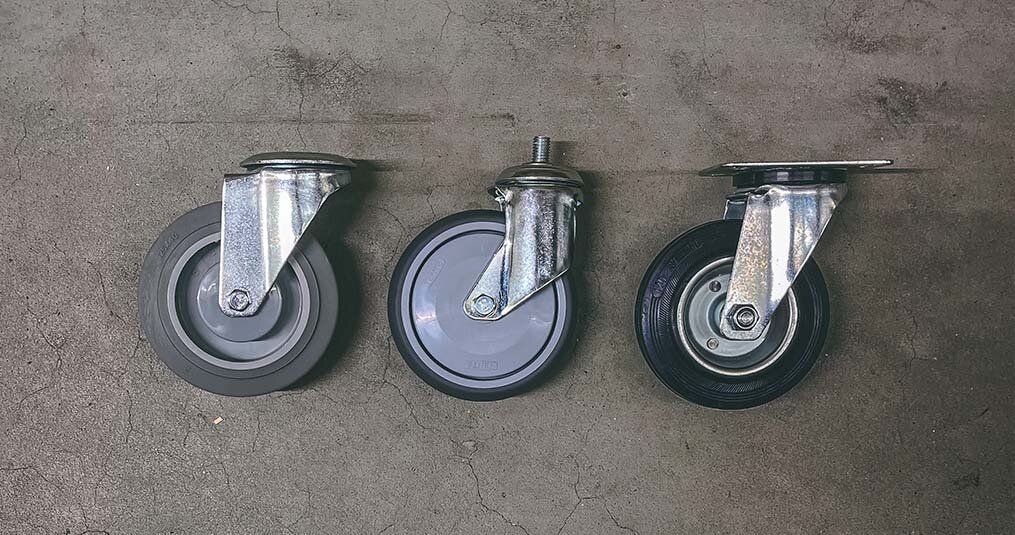
Which type of fitting do I need: threaded stem, bolt hole or top plate?
Choosing the right swivel castor might seem simple, but the type of fitting plays a key role in both stability and ease of use. The mounting method determines how securely the castor is attached and how durable the construction remains during daily use. The three most common fitting types are: threaded stem, bolt hole and top plate. In this article, you’ll learn the differences between them, their pros and cons, and how to choose the right castor for a safe and stable application.
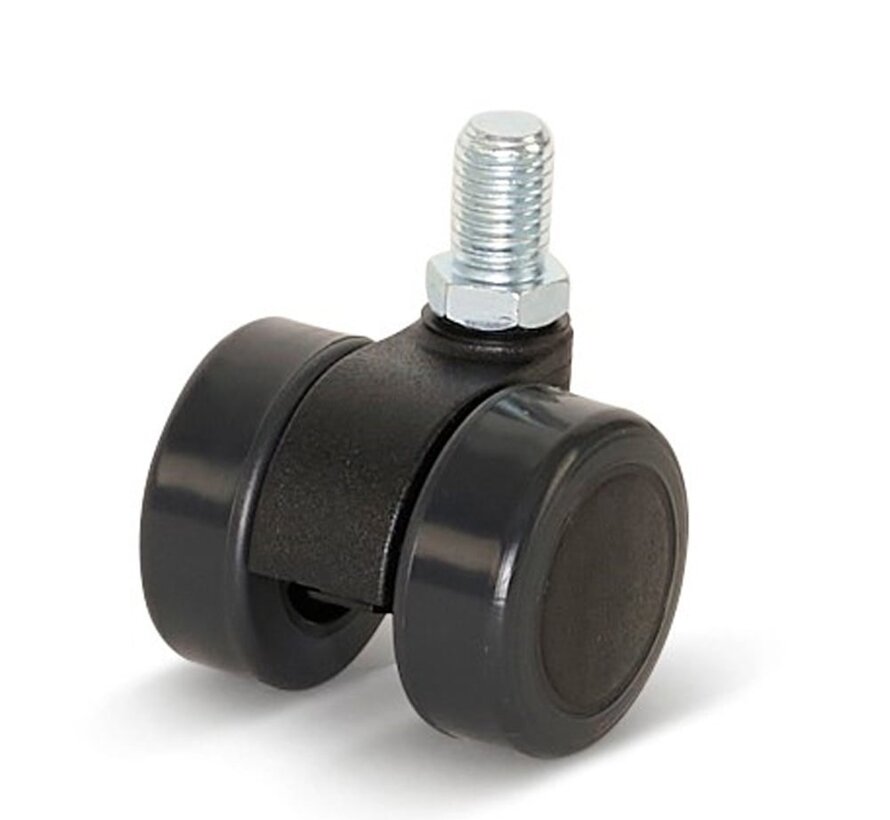
Threaded stem fitting: compact and ideal for light use
With a swivel castor with a threaded stem, the fitting consists of a metal stem with a screw thread. It is screwed into an insert or threaded socket in the base of a chair, trolley or piece of furniture. This type of fitting is particularly popular for light applications where speed and simplicity are important. Common examples include office chairs, displays or light equipment. Because the stem takes up little space and can be easily replaced, this fitting is ideal for situations with limited load capacity or where castors are changed frequently.
Advantages:
- Very compact and easy to mount neatly
- Quick to replace when worn or serviced
- Suitable for light and medium-duty applications
Disadvantages:
- Less stable under heavy loads
- Depends on accurate fit in the socket
Use a threaded stem fitting for furniture or applications where castors are replaced regularly or loads remain moderate. For heavier applications, another type of fitting is usually the better choice.
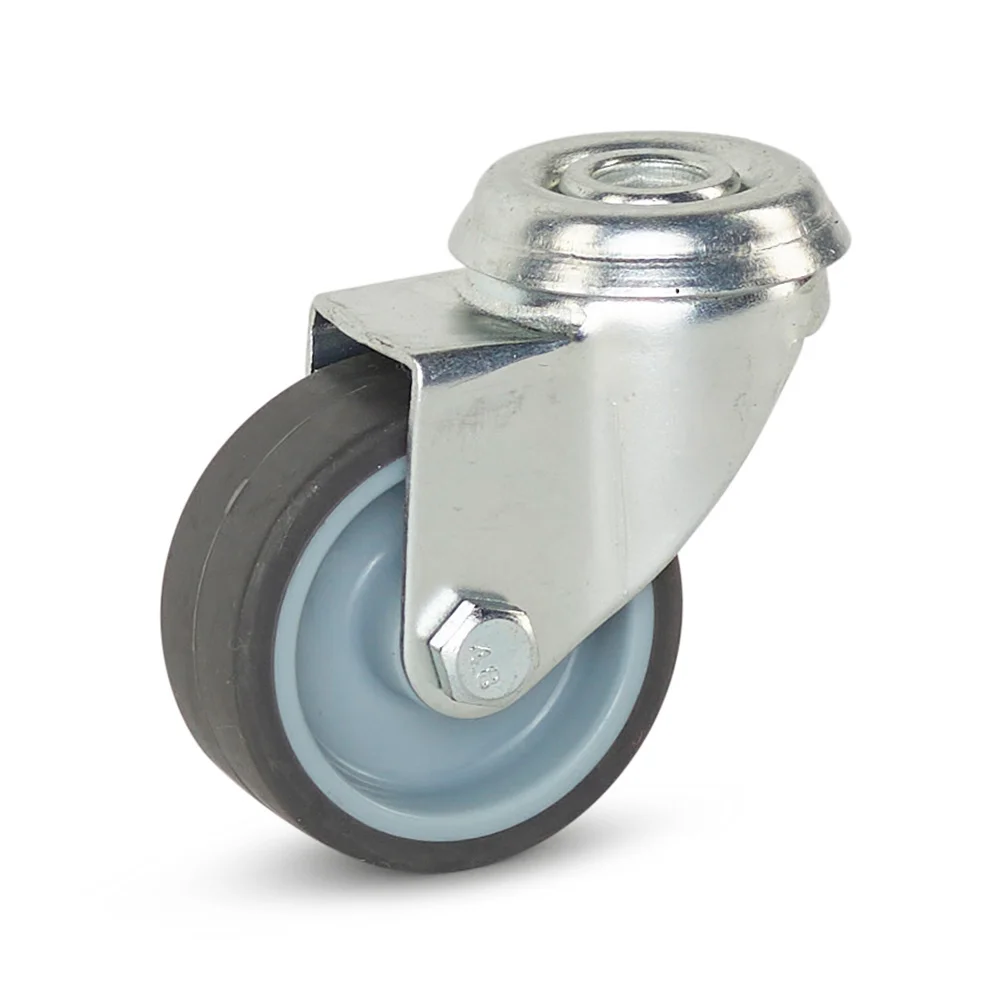
Bolt hole fitting: flexible and reliable
With a swivel castor with a bolt hole, the wheel is attached through a central hole using a bolt or threaded rod. This provides a strong mounting solution without a top plate. Bolt hole castors are commonly used on transport trolleys, roll containers or medical equipment.
Advantages:
- Secure fixing with bolt or threaded rod
- Height can be adjusted easily
- Suitable for medium-duty loads
Disadvantages:
- Installation takes slightly longer
- Not suitable for very heavy loads
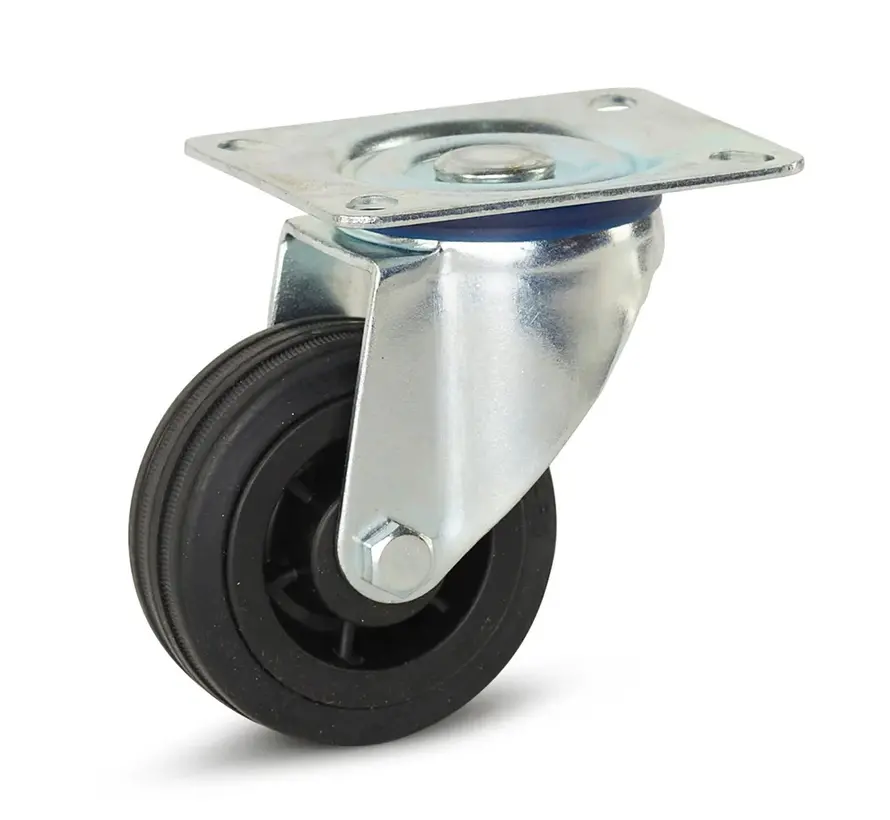
Top plate fitting: the most common and stable option
The top plate fitting is the most commonly used method for mounting a swivel castor. The castor is secured with a strong metal plate featuring four screw holes. This design distributes the weight evenly across all mounting points, resulting in a stable and durable connection. Top plate castors are often used under workbenches, transport trolleys, flight cases and other structures that must handle heavy loads.
Advantages:
- Extremely stable and reliable
- Even weight distribution
- Ideal for heavy-duty and industrial applications
Disadvantages:
- Requires a flat mounting surface
- Higher overall height compared to stem or bolt hole fittings
Choose a top plate fitting for high-load or heavy-duty applications, such as under workbenches, transport carts or in industrial environments. They are also widely used under furniture like tables and chairs.
Comparison: threaded stem, bolt hole or top plate?
Not sure which fitting type best suits your application? Below is a quick comparison to help you make the right choice.
Threaded stem
If you value convenience and speed, a threaded stem fitting is ideal. It supports lighter loads and provides slightly less stability, but it’s very easy to install. Perfect for furniture, chairs or light equipment that’s frequently moved or replaced.
Bolt hole
Need a stronger mounting solution without complicated installation? The bolt hole fitting is a great choice. With medium load capacity and solid stability, it’s suitable for equipment, workshop carts or transport trolleys. Installation takes a bit longer than a stem, but you gain added strength.
Top plate
Looking for maximum stability and reliability? Go for a top plate fitting. It offers high load capacity and excellent stability, making it perfect for workbenches, transport trolleys and industrial applications. Installation is slightly more complex, but the result is a strong and durable setup.
In short: for simplicity, choose a threaded stem. For extra stability and flexibility, go with a bolt hole. And for heavy-duty or intensive use, a top plate is always the best option.
How to choose the right fitting type?
The right fitting depends on the object, weight and required stability. A proper choice not only prevents damage but also ensures smooth and safe use of your castors.
Your choice depends on:
- Load capacity: how heavy is the application?
- Mounting space: is there room for a plate or only a stem?
- Usage: will the castor be replaced often or used intensively?
An incorrect fitting can cause loose castors, wear or damage. Make sure the wheel, fitting and application are properly matched.
Use our handy product finder to quickly determine which fitting type you need.